← Back to All Òrìṣà
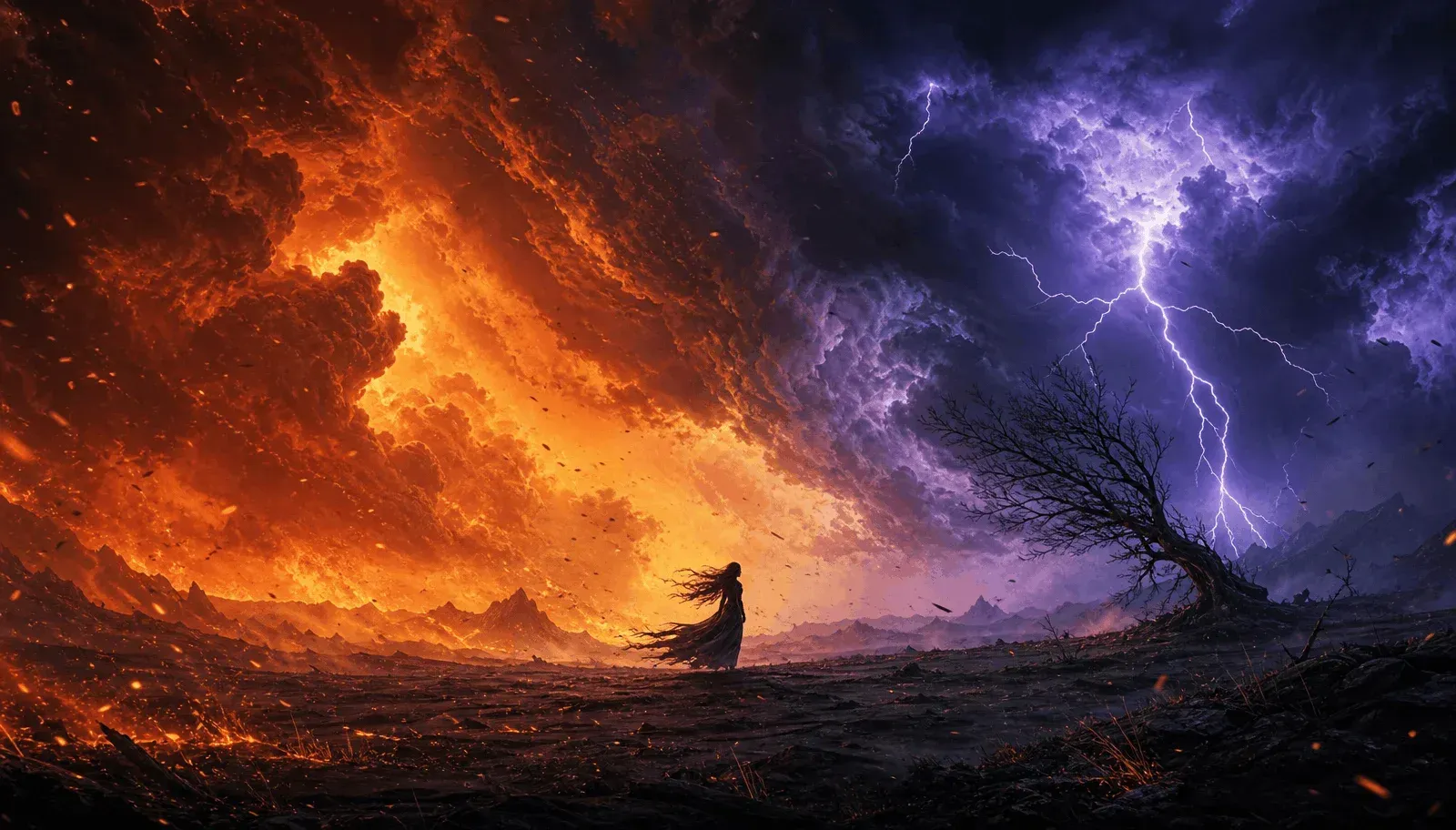
A cinematic view of dark storm clouds rolling across a deep crimson sk

Òrìṣà . Thunder & Lightning

Sango

Pronounced— shahn-goh

God of Thunder, King of Fire

Domain
Thunder, Lightning, Justice
Symbol
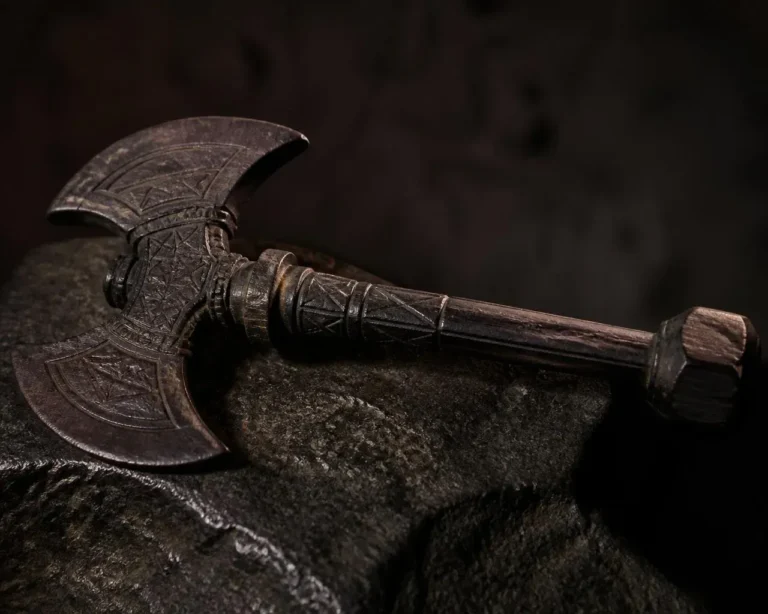
Double-headed Axe (Oșé)
Colours
Red & White
Wives
Oya, Ọṣun, Oba
Status
Actively worshipped

Who Is Sango?

Before ruling the skies, Sango was the flesh-and-blood third Alafin (King) of the Oyo Empire. He was brilliant, terrifying, and fiercely ambitious. But heroes are built on flaws. Sango was an amateur magician deeply obsessed with storm manipulation. During a late-night lightning experiment, things went completely sideways. A rogue bolt struck his own palace, instantly leveling it and wiping out his family. Overcome with guilt, he fled his kingdom. Yet his story didn't end in the dirt. His spirit ascended straight to the heavens, converting his mortal tragedy into immortal power. Talk about an epic redemption arc.

THE LEGEND OF Sango

  1. King

    King

    Ṣàngó ruled the Oyo Empire, earning a reputation as a bold and ambitious leader.

  2. Rise

    Rise

    His victories in battle transformed him into one of Yorubaland's most feared rulers.

  3. Thunder

    Thunder

    Legends say he commanded thunder and lightning, powers that became his eternal symbol.

  4. Tragedy

    Tragedy

    His reign ended in sorrow, giving rise to one of Yoruba mythology's greatest legends.

  5. Ascension

    Ascension

    Rather than being forgotten, Ṣàngó became an Òrìṣà honoured as the god of thunder and justice.

  6. Legacy

    Legacy

    Today, he remains one of the most revered Yoruba deities, celebrated in festivals, worship and popular culture.

what defines Sango

Oṣe

Oṣe

The double-headed axe, twin blades carved to mirror one another, standing for balanced judgement and the authority to punish or protect in equal measure.

Bata Drums

Bata Drums

His voice. Cracking like lightning, roaring like thunder, refusing to be silenced. A fitting echo for a king who ruled with fire.

Red & White Beads

Red & White Beads

Worn by devotees during worship, red for fire, passion, and raw power; white for wisdom and restraint. Together, the two sides of a king.

The Ram

The Ram

His animal. Stubborn, powerful, impossible to move once it's decided something. A fitting stand-in for a king who never backed down.

What Sango Commands

  • Thunder

    His voice before he arrives, a roar loud enough to announce his presence across the heavens before anyone sees him.

  • Lightning

    His weapon of choice. Fast, precise, and reserved for those who've earned it, a visible strike against injustice, not random destruction.

  • Fire

    Not just heat but transformation the same force that destroys a household can also forge something new out of the wreckage.

  • Justice

    The throughline of everything else. He rewards honesty, punishes deceit, and is invoked specifically in moments people need a fair outcome.

Major Myths

the fire magic story

Ṣàngó possessed powerful magical abilities capable of summoning fire. During a display of power, destruction occurred, leading to tragedy and his eventual downfall

oba koso

Enemies claimed Ṣàngó hanged himself. His followers rejected this and declared: "Oba Koso — The King Did Not Hang." The phrase became one of his most famous titles.

thunder and lighting

Yoruba traditions teach that thunder and lightning are visible signs of Ṣàngó's presence and authority, continuing long after his death.

Worship & Festival

Ṣàngó is honoured for justice, leadership, protection, and truth. He is called upon in times of decision, conflict, and change.

Common Offerings

  • Kolanut

  • Palm wine

  • Red & white cloth

  • Goat

  • Honey & fruits

  • Bàtá drumming

Festivals & Celebrations

  • World Ṣàngó Festival

    Ọ̀yọ́, Nigeria

    August

  • Santería Feast of Santa Bárbara

    Cuba & diaspora

    Dec 4

Sango left visual artifact

She Chose the Storm Over the Forge

Ọya was Ogun's wife first. Ṣàngó arrived — all thunder, fire, and war — and she made a decision that neither man ever recovered from. This is that story.

Read The Full Story →

Frequently Asked Questions

How does Sango dress?
Ṣàngó dresses as a warrior-king in vibrant red and white, wearing a traditional braided hairstyle and a kilt-like skirt. He is instantly identified by his signature double-headed wooden axe (Oshé), which represents lightning.
Is Ṣàngó the same as Shango in Santería?
They are the exact same Òrìṣà under different regional names across the African diaspora. He is called Ṣàngó in West Africa, Changó in Cuban Santería (often linked with Saint Barbara), and Xangô in Brazilian Candomblé.
How does Ṣàngó compare to other thunder gods, like Zeus or Thor?
He shares the universal "sky-father with a weapon" archetype, wielding an axe rather than a hammer or bolt. Unlike the Greek and Norse versions, Ṣàngó's lore is uniquely rooted in his historical reign as an actual human King of Oyo.
Sango faq Why does Sango wear braided hair and a skirt?
Ṣàngó wears braided hair to contain his volatile lightning energy and signal his role as a spiritual vessel. His kilt-like skirt (Wàbì) was the standard battle gear for ancient Yoruba warrior-kings, lined with protective charms to deflect enemy weapons.
Can someone outside Yoruba culture honour or worship Ṣàngó?
Yes, diaspora traditions like Santería and Candomblé have long welcomed global initiates. However, practitioners generally advise approaching his worship through an established lineage or community rather than solo internet research.
Does Ṣàngó have children or other family besides Ọya, Ògún, and Ọba?
Yes, Yoruba tradition names several family members, including his brother Ajaka and his son Aganju. While his extended family history is vast, oral traditions focus most heavily on his central relationships with Ọya, Ògún, and Ọba.